
Welcome to my Blog
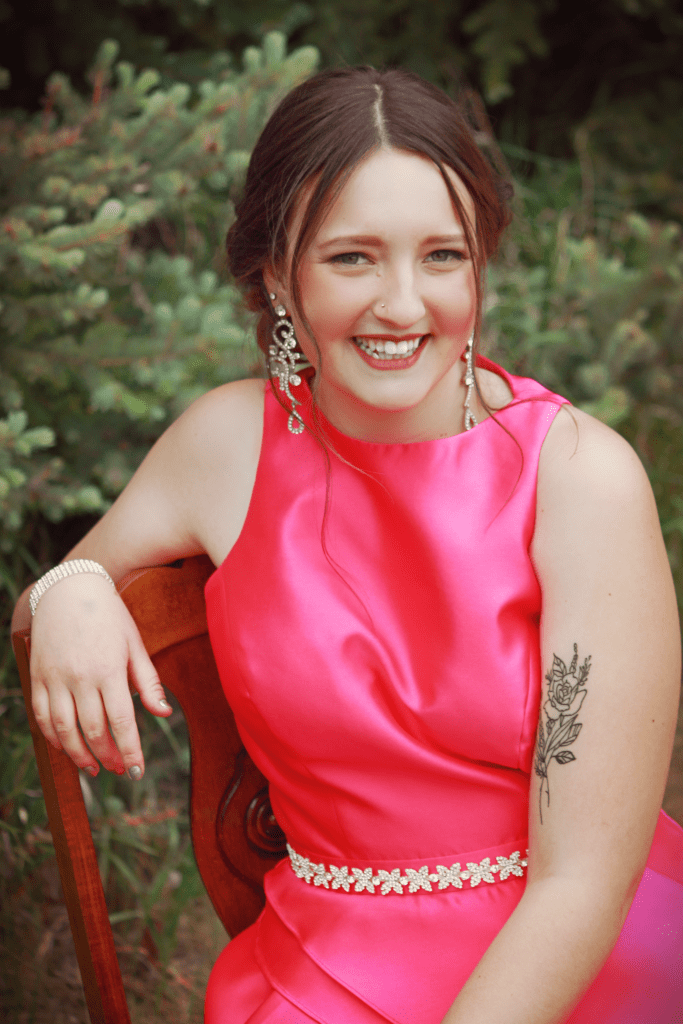
Be yourself; Everyone else is already taken.
— Oscar Wilde.
Hello! My name is Laci Glennie and I am in Secondary Education. I am from a small town named Carnduff, SK and I cannot wait to see where this education journey takes me.
Never stop learning
Be yourself; Everyone else is already taken.
— Oscar Wilde.
Hello! My name is Laci Glennie and I am in Secondary Education. I am from a small town named Carnduff, SK and I cannot wait to see where this education journey takes me.
ECS 203 has introduced many new concepts to me and this is a quick summary of what I learned and what I will take with me into my future as a teacher.
My schooling has shaped how I “read the world” in many ways. In school, I was asked to read books by mostly white male authors and rarely anything else. I was taught the stereotypical idea that if there is a person of colour, they are probably poor or ‘the help.’ Going into the classroom I will go in with the bias that these books I grew up reading are the ones I should teach in my classroom because they are good. This is not necessarily true and in order to work against this bias, I will need to work really hard in trying to bring in diverse readings. Diverse reading is very important because I will have diverse students who deserve to see themselves represented in the books they are asked to read. The lenses I bring into the classroom are that of a white settler. I think about the importance of parliament and Canada’s history. Initially, I often glaze over the indigenous population and think of the stereotypical stuff relating to them. Already I am working on thinking deeper and gaining a different perspective. Going into the classroom I will have the lens of a settler and I will have to unlearn my initial thoughts such as what I think defines Canada. I will have to reshape my lens and do my best to work against my biases to provide the best education to the students possible.
The “single stories” presented in my school were often those by white males. The stories we read had main characters that were often white and if there was a person of colour, they often did not have a major role. The times that the story did contain a main person of colour they were often presented as poor or struggling. My school taught me that there were only certain stories worth learning and those were the ones often written by white males. Even when we were asked to read stories by Canadian authors none were written by Indigenous authors. This tells us as students who is important and who is not even if that’s not true. The majority of students in my school were white and the single stories being presented said that the white stories mattered. As a teacher, it is my job to break this pattern and present a diversity of readings so everyone feels like their story matters because they do.
Throughout my school experience mathematics was taught the same way in every classroom. Personally, I struggled with mathematics and the teaching methods used in my school did not help me improve. My teachers used the typical Eurocentric ideas to teach mathematics. My teachers only provided one way to go about the problems and solutions in class which prevented a lot of students from succeeding. If we, as students, decided to go about the problems in a different way the teachers often marked it wrong even if we got the correct answer because we used a different system. The idea that there is only one way to go about these problems and the lack of options provided was very oppressive to many students because not everyone thinks the same way. I remember distinctly in grade five I struggled greatly with mathematics. The teacher gave students tokens and every time we asked a question, we would lose a token. Once all of our tokens were gone, we could no longer ask anymore questions that day. This caused me a lot of issues because I struggled so much with mathematics, I would ask questions to try and understand and eventually I would not be able to ask anymore and I was forced to remain confused.
Inuit mathematics challenges Eurocentric ideas in many ways. Poirier points out many ways Eurocentric ideas are challenged in his article “Teaching Mathematics and the Inuit Community.” The Inuit community are challenging the idea that mathematics is a universal language. They believe that everyone can about it in different ways and still come to the same solution. They also Challenge the idea of it being a universal language because they speak a different language and things may not translate the same way causing confusion. The Inuit community use different teaching methods, unlike the Eurocentric idea of asking students questions whether or not they know the answer the Inuit community uses a teaching method where teachers do not ask students questions if they think they do not have the answer. The Inuit community believes mathematics is the sense you never knew you had and it is about finding ways to solve problems. They believe mathematics is not about the equations that are given it is about learning how to go about problems and solve them. Unlike Eurocentric ideas, they support the idea of finding different ways to solve and go about problems.
Reference
Poirier, L. (2007). Teaching mathematics and the Inuit community, Canadian Journal of Science, Mathematics and Technology Education, 7(1), p. 53-67.
It is very important to teach Treaty Education because we are all treaty people. We are all on treaty land and must learn the importance of that. In general, a teacher does not know the historical background of their students just by looking at them. There may be a First Nations, Metis, or Inuit student in the classroom and they would have no idea. It is important to not only educate the students on Treaty Education but in the situation of the school’s staff not understanding the importance of it, it is also important to educate them and provide resources where they can go and educate themselves on the importance of Treaty Education. It is important to remember that as teachers we have a big influence over the students and what we prioritize as important the students will as well. If we address Treaty Education with the same importance as a Math class, students will have a better understanding of treaties and what land they are on and the significance of that and not think of it as insignificant.
In a class where students have a lack of understanding around Treaty Education you must start from the bottom and work your way up. Start small and explain first that we are all treaty people and we all have the responsibility to learn and understand what that means. There is no excuse as to why Treaty Education should not be taught in schools. As teachers it is our job to educate each other and help one another to grow as a person. The purpose of teaching Treaty Education or any content/perspectives relating to First Nations, Metis, and Inuit is that we are all on their land and we are all a part of the treaties created. In order to understand the significance of the land we stand on and respect the treaties we must teach each generation of its importance because it will never become less important.
The curriculum outlines what needs to be taught in class. Treaty Education is in the curriculum and should be addressed with the same importance as any other subject. It is important to remind teachers that this is not an optional subject and it is important to address Treaty Education with the same amount of importance as any other class. When addressing this subject, it helps students understand why it is important to learn it when you remind them that we are treaty people. Being reminded that we are treaty people makes the subject more personal and makes people more willing to learn it and respect it. People make mistakes and that is okay but it is important to correct these mistakes. In a classroom where students have been given false information mistakes are going to happen. As a teacher, it is our job to correct students when they say something that is not correct and explain why what they have said is wrong. As teachers, we all have the responsibility to teach Treaty Education and there is no excuse to not teach it.
As I hope to be a secondary English teacher the article “Culturally relevant pedagogy and critical literacy in diverse English classrooms: A case study of a Secondary English teacher’s activism and agency” by Anne Lopez was very useful to me. Culturally relevant pedagogy in my future classroom will look like diversity because I Plan to incorporate diverse texts so students are given the opportunity to understand and learn different perspectives. In my classroom it will feel like acceptance and exploration because the students will learn to explore different topics that are not necessarily often well understood. As well as they will be able to explore their own identities to see how their beliefs are represented. It will sound like students sharing their understandings and then myself helping to deconstruct and then reconstruct their knowledge so they have the proper knowledge without being emotionally wounded. My classroom will be a place for students to feel safe to explore new ideas and form an understanding from them. I believe a sense of place is also very important for students so as a future teacher I plan to incorporate place-based learning as much as possible. I plan to do this by taking them out into the community and bringing the community into the classroom/school. I plan to emerge them into life outside of the classroom as much as possible while also bringing it into the classroom through the materials we will read. I believe it is important that students form a connection to the land and the community that they grow up and learn in because it is a part of who they are.
Reference
Lopez, A. (2011). Culturally relevant pedagogy and critical literacy in diverse English classrooms: A case study of a secondary English teacher’s activism and agency. English Teaching: Practice and Critique, 10(4), 75-93.
According to “John Dewey and the Challenge of Progressive Education” teachers need to adapt to the changing times. Dewey (2013) explains that educational trends are used as an attempt to keep up to the changing patterns in the global network society (p. 77). These trends include “active and cooperative learning, interdisciplinary projects, networked distance learning, and global corporate universities” (Dewey, 2013, p. 77). Since technology is becoming so prevalent in society students will have access to more information than they ever have before and because of this, teachers will need to adapt their lesson plans in order to keep up with these changes. We can realize education leaders’ democratic aspirations through looking at the structural transformation of the school, connecting natural processes with children’s instincts, and how educators can shape activities to obtain democratic habits (Dewey, 2013, p. 77). Structural change is possible and likely to happen with the progression of technology. Technology connects people together but it is a simulation of real-life and although useful it is important to remember it is not real. Educational leaders are tasked with the challenge of creating shared ideas. Knowing about these three concepts will allow us to observe how teachers go about tasks in classrooms to see what their democratic aspirations are. Whether it is incorporating technology and accepting the change or if it is ignoring change and not adapting. As well as if educational leaders are teaching students that technology is not real life and if they are incorporating more than one idea. Overall we can realize educational leaders democratic aspirations by observing how they go about tasks and if they bring new ideas into the classroom.
I do not remember being specifically taught anything about citizenship education but I remember having assignments that involved getting out into the community and volunteering. I remember being asked what kind of person I wanted to be and whether I want to make a difference in the world. My teachers would always emphasize the importance of our actions because as Joel Westheimer said in the video “What Kind of Citizen” everyone has a role to play in history. My teachers would always tell us that we are making history and our actions can play a big role, this was especially taught in social studies and history when it was around election time. My teachers would always play the devil’s advocate to help us understand that people have different perspectives and no matter how you try you probably will not be able to change their minds.
The types of citizenship my school focused on would be the personally responsible citizen and the participatory citizen. I say this because there was never any emphasis on social change throughout the school. Teachers rarely talked about current issues and if they did, they never questioned us on how we could address these social issues and injustices. They focused on personally responsible citizens by getting us to donate to the food bank every Christmas by making a competition between classrooms on who could donate the most. Starting in middle-school every year up until grade twelve we had to do volunteer work outside of the school to help the community. They emphasized the importance of being responsible and obeying the law. Teachers rewarded students who worked hard, were responsible, honest, kind, helpful, and so on. Teachers rewarded students with an assembly where students were given student-of-the-month. At the end of every month, one student from each grade was chosen to be acknowledged for their hard work and was given some sort of gift. My school also focused on Participatory citizens because through programs like the Student Leadership Program students were able to take on leadership roles. For many projects’ teachers had their students create ways to raise money to donate to different organizations. It was very much about helping the community.
This approach allowed students to become responsible and respectful. It allowed us to understand the importance of working hard and helping the community. Though, it stopped students from asking why. Why are people hungry, why are these issues occurring? Instead of having us figure out the problem and then acting on it, we were just taught to help. Although it is good to help it would be more beneficial to ask questions to end the issues once and for all instead of just ‘putting a band-aid over it’ and calling it good. We were taught to create momentary fixes rather than permanent fixes. The approach to citizenship in any given place tells us what the people value. My school for example values helping others and working towards social change but it does not search for a permanent fix or question why issues are occurring and what can be done to solve them. It will represent what the curriculum makers value because it shows whether they want to create students who will organize programs to help people, students who will donate and do what they can to help, or students who will question society and look deeper into the problem to find a solution, or all three. All three types of citizens are good in their own way it just depends on what type of person the curriculum wants to create. In the end, the goal is to produce an honest, responsible, hard-working person, it just depends on how the curriculum creators think this is possible.
Work cited
Westheimer, Joel. What Kind of Citizen? The Politics of Education for Democracy. American Educational Research Journal, 2004, democraticdialogue.com/DDpdfs/WhatKindOfCitizenAERJ.pdf.
Video reference from:
While reading Ben Levin’s article “Curriculum Policy and the Politics of What Should Be Learned in Schools” many different thoughts went through my head. Most of what I read mostly confirmed how I thought the curriculum was put together but some of it was surprising. The biggest thing that surprised me is the fact that the “formal curricula may have only a vague relationship to actual teaching and learning practices” (Levin, 2008, p. 17) Meaning that when creating the curriculum, how teachers will present these ideas in classrooms is not really thought about. I believe that how these concepts will be presented in classrooms should be a part of the discussion when creating the curriculum. Knowing that there is only a vague relationship between the formal curriculum and actual teaching practises leaves me to wonder how the creators of the curriculum expect teachers to follow their guidelines? It was also eye-opening to read about how politicians will create conflict in order to gain attention (Levin, 2008, p. 13). If the curriculum is so closely connected to politics what does this mean then for the creation of the curriculum. Do people create conflicts about different subjects to gain attention? For example, Sex Education in schools is controversial so does this mean that people will create conflict relating to Sex Education to remove it from the curriculum? It is my belief that although the creation of the curriculum is a part of a large debate it should focus around what is in the best interest of the students. How teachers will present the ideas in the curriculum and how students will learn it should be the number one concern.
In “Professional-Led Curriculum Development” it makes clear the fact that teachers have very little involvement in the creation of the curriculum. This concerns me because in my opinion teachers should play a large role in its creation since they are the ones presenting it. Since the curriculum is so complicated it would only make sense to allow teachers to be involved in its creation so they know how to go about interacting with it. Not only should the curriculum’s creation involve teachers but through this reading I have discovered the importance of involving parents, people from the community, and even students. Before reading this article, I was not aware of who was involved in the curriculum’s creation but after reading this I have a better understanding of not only its creation but its importance. This article leaves me questioning why teachers do not have a larger involvement and why is their involvement not a priority? It only makes sense to involve teachers because they have the skills and knowledge to create a master piece.
References
Levin, B. (2008). Curriculum policy and the politics of what should be learned in schools. In F. Connelly, M. He & J. Phillion (Eds.), The SAGE handbook of curriculum and instruction (pp. 7 – 24). Los Angeles, CA: Sage. Available on-line from: http://www.corwin.com/upm-data/16905_Chapter_1.pdf.
The Saskatchewan Way: Professional-Led Curriculum Development. Available on-line from: https://www.stf.sk.ca/sites/default/files/the_saskatchewan_way_professional_led_curriculum_development.pdf
Deepening the Discussion:
There are many ways educators can go about addressing the ways in which the systems that we teach our curriculum in are intrinsically homophobic, transphobic, biphobic, and oppressive towards queer and trans people. It is important for educators to keep in mind that they bring their own ideas into classrooms. In order to address the issues that this will cause, educators need to be taught how their assumptions can affect their students. According to the Saskatchewan Ministry of Education educators can do many things to avoid being oppressive towards queer and trans students such as:
“Focus[ing] on issues, not opinions…If students state broad opinions, require them to support those opinions with evidence rather than speculation or personal experience. Use secondary sources to initiate investigations of issues to allow students to see how others have talked about the issues. Honour a student’s preferred pronoun and name. Ensure that students are welcome and safe to wear clothes, hairstyles and accessories that are congruent to their affirmed gender. Avoid situations that force students to make gendered choices. Do not divide classes or ask students to line up according to gender. Rather than referring to the class as “boys” and “girls”, use gender neutral terms such as “students”, “children” or “folks”. Provide opportunities for journaling or informal writing so students have a chance to sort through their feelings and organize their thoughts before jumping into a discussion.” (“Deepening the Discussion,” 2015, p. 18).
Educators must stop assuming everyone is straight and must find a way to teach students that heterosexuality is not superior. Educators must not listen to “common-sense” and must start to become open-minded. A teacher who is closed-minded will teach their student’s to be closed-minded whereas an open-minded teacher will teach opened-minded students. Educators can also address the system in which the curriculum is taught by providing material that includes same-sex marriages, transgender characters, etc. It would be beneficial to provide more diverse reading material for students instead of just the typical stories about straight people with minimal diversity.
Queering Classrooms, Curricula, and Care: Stories from Those Who Dare:
Teachers should provide the duty of care for all students because every student deserves to be cared for. A person’s sexuality should not determine the level of care they get from their teacher. Celebrating and teaching sexuality can be both healing and educational for all students no matter their sexuality or gender (Jiménez, 2009, p. 172). Creating a classroom free from any notion of sexuality creates stigma around it and can have harmful affects on students. Students who do not fit the ‘norm’ may wonder what is wrong with them instead of embracing who they are. According to Karleen Jiménez (2009) it is a teacher’s responsibility to deconstruct sexual and gender binaries (p. 173). It is beneficial to bring discussion of sexuality into the classroom to help educate students allowing for more understanding around sexuality and gender. If teachers believe it is their job to care for students apart of the LGBTQ+ community they will be able to provide better care for their students (Jiménez, 2009, p. 178). If teachers fear providing support for LGBTQ+ students they are forcing them to become targets (Jiménez, 2009, p. 176). Teachers should seek to provide care for all of their students equally. This allows for a better understanding from students towards the LGBTQ+ community and less hate. Students learn from their teachers so teachers should be teaching understanding and acceptance.
Queering Curriculum Studies:
Integrating queerness into curriculum studies is important to me because I want every student that enters my classroom to feel safe and accepted for who they are. I plan to celebrate sexuality and gender within my classroom by celebrating pride and explaining why we are celebrating it. I plan to use the student’s preferred pronouns and respect their gender identity. I also plan to teach other students the importance of respecting their classmate’s pronouns and gender identity. I plan to provide open discussions that are respectful and educational. In my classroom, I plan to provide a little library with readings that include LGBTQ+ characters. For mandatory readings, I hope to provide a diverse selection allowing students to read about characters like themselves. I want everyone to feel at home and comfortable. I want students to walk in and be able to express themselves without judgment. I want to be able to educate students on privilege and what it means to be privileged. I want to create an environment where no student is above another and understanding is the main goal. Integrating queerness into curriculum studies in my classroom sounds like students explaining different situations to one another, support, and acceptance. I plan to have diverse representations of the LGBTQ+ community to help students erase the idea of the white heteronormative imagery that is present in many student’s lives. I want my students to feel cared for and safe to be themselves.
References
(2015). Deepening the Discussion: Gender and Sexual Diversity. Saskatchewan Ministry of Education. Retrieved from file:///C:/Users/User/Downloads/84995-Deepening_the_Discussion_Saskatchewan_Ministry_of_Education_Oct_2015_FINAL%20(2).pdf
Heather Sykes (2011) Queering Curriculum Studies, Journal of Curriculum and
Pedagogy, 8:1, 29-31, DOI: 10.1080/15505170.2011.572517
Karleen Pendleton Jiménez (2009) Queering classrooms, curricula, and care:
stories from those who dare, Sex Education, 9:2, 169-179, DOI: 10.1080/14681810902829638
According to common sense a “good” student is one who sits and listens quietly during class, not one who cannot sit still or is considered a ‘handful.’ The students who are capable of sitting still and quietly listening are the ones who are privileged in this definition of a “good” student. Student’s who do not conform to typical classroom settings struggle and viewed as restless and disruptive. According to Kumashiro, this causes issues because, as he explained in his article, students start to feel at fault and try to ‘fix’ themselves. They blame themselves for not conforming when, in reality, it is not their fault that they do not meet society’s expectations of a “good” student. Kumashiro continues on to stay that the “very ways we think about learning can be oppressive” (22). Students who are not considered a “good” student according to common sense are blamed and identified as a ‘handful’ which can have negative effects on these students. The “good” students are shaped by historical factors because, according to Painter’s article, education is just memorizing information in rooms that are uncomfortable (12). The goal is not to meet each student’s needs, it is to force traditional ideas and customs on students (Painter 11). Those who do not fit the mold of a “good” student are blamed for being different rather than having the education system change itself so a “good” student can be considered more than one who can sit quietly for long periods of time.
 Laci's Blog